Operations platform for a North American logistics operator.
A mid-market logistics business was running dispatch, exception handling, customer updates and reporting across spreadsheets, email and several disconnected systems.
01 / Situation
Operations teams had no single view of an order exception. A dispatcher could spend 8 to 12 minutes reconstructing status from multiple systems, while customer-service staff manually copied updates into tickets.
02 / Architecture & delivery
BARSPAN would start with a two-week process and integration audit, then establish a canonical order model, API gateway, role-based operations console, event queue and audit trail. The build would run in three increments: exception workflow, operational reporting, then customer-facing status APIs. Production would use staged releases, automated tests, observability and rollback paths.
03 / Delivery sequence
04 / System shape
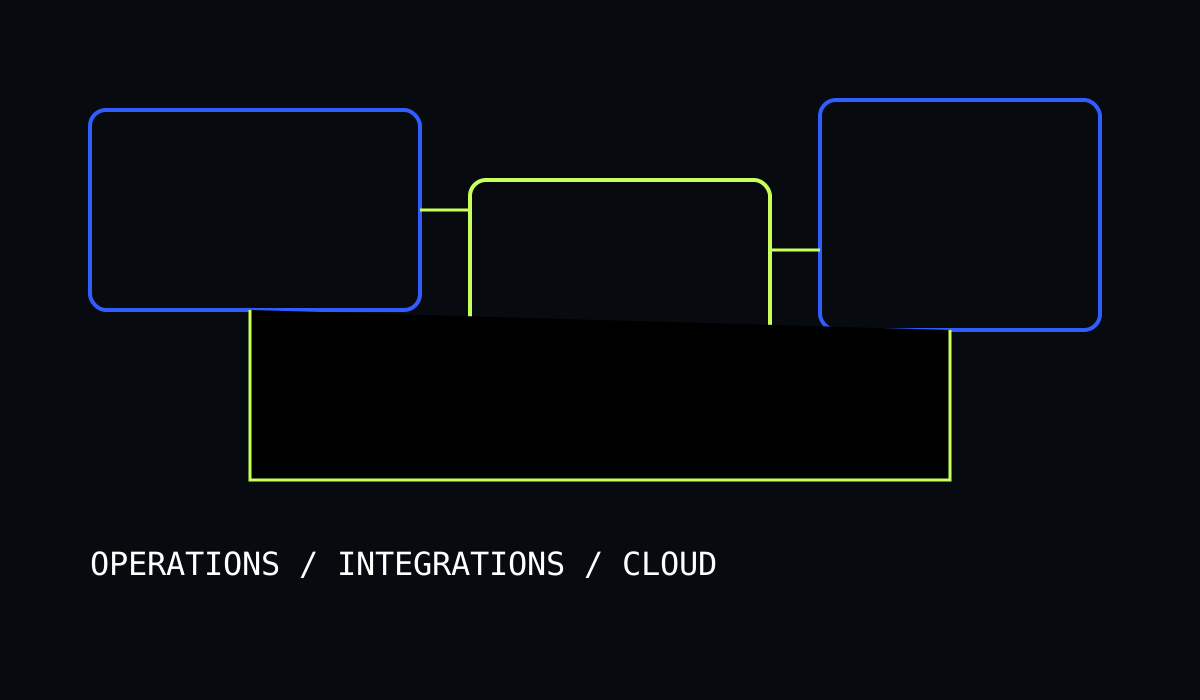
Web operations console → API layer → event queue → TMS/WMS/CRM connectors → PostgreSQL reporting store → cloud observability → role and audit controls.
05 / Outcome model
Illustrative planning model: 20 to 30% fewer manual exception touches, 25 to 35% faster exception resolution and materially better traceability. Delivery model: 1 engagement lead, 1 solution architect, 2 to 3 product engineers, 1 QA engineer and shared DevOps support across the 16-week program. These ranges are deliberately conservative compared with published logistics modernization examples, where public AWS customer stories report larger cost and performance changes.